
How high-interest low-level reading materials can quietly change everything.

Let me paint you a picture.
You’ve spent weeks building trust with a student who has basically declared reading his personal nemesis. Today you slide a passage in front of him about zombie ants. Real ones. Ants that get taken over by a fungus that controls their brains and turns them into the walking dead.
He picks it up. He reads it. He looks up and says, “Wait. This is actually real?”
That’s the sound of a struggling reader having a successful reading experience — possibly for the first time in a long time. And it changes things.
Why High-Interest, Low-Level Materials Matter
By the time our students reach middle school, most of them are carrying years of failure. They’ve been handed texts that were either too hard to read or too young to be seen with in public. They’ve learned, through painful repetition, that reading = struggle, and struggle = feeling stupid.
That belief — I can’t — is the real obstacle. Not the skill gap alone. The belief.
Here’s the thing about high-interest, low-level materials: when a student can actually read what’s in front of them, something shifts. They experience what success feels like. And success, repeated enough times, starts to chip away at “I can’t.”
There’s also a practical side to this. Students cannot build fluency and comprehension on texts that are too difficult. They need practice at their actual reading level — and hi-lo materials make that practice possible without making a 7th grader feel like a 2nd grader.
In short: high-interest, low-level texts give students the right conditions to actually get better at reading — while also giving them a reason to want to try.
“But Won’t They Know It’s Easy?”
Fair question. These kids are not oblivious. They are painfully aware of where they stand.
But here’s what I’ve found: high-interest does a lot of the heavy lifting. When the content is genuinely fascinating, students focus on the topic, not the reading level. The right content makes them lean in instead of check out.
A few things that help:
Choose topics with a “wait, is this real?” factor. Weird science, survival stories, strange-but-true history — if it would be interesting at the lunch table, you’re on the right track.
Pay attention to how materials look. Clean, modern formatting doesn’t signal “this is for little kids.” Design matters more than we sometimes give it credit for.
Don’t make a big deal of the level. If you introduce it as something genuinely cool, students will take your word for it. If you caveat it (“This one might be a little easier for you…”), you’ve already lost them.
Let them choose when possible. Offering a selection of topics gives students some agency and buys a lot of goodwill.
What Success Actually Does
You can tell a struggling reader they’re capable all day long. Until they feel capable — until they have actual evidence of it — those words bounce right off.
A positive reading experience is that evidence. When a student finishes a passage, understands it, and has something to say about it, that’s a foothold. Over time, with enough of those experiences, students start to take slightly bigger risks. They’ll try something longer. They’ll ask a question about the content. They might even pick something up on their own.
That’s what we’re after — not just one good reading day, but a student who is slowly rebuilding their identity as someone who can read.
A Place to Start
If you want to try hi-lo materials but aren’t sure where to begin, I put together a set of passages designed for exactly this: high-interest content, accessible reading level, age-appropriate look and feel — ready to use with grades 5–8.
Zombie Ants: High-Low Passages with Comprehension (5th–8th Grade)
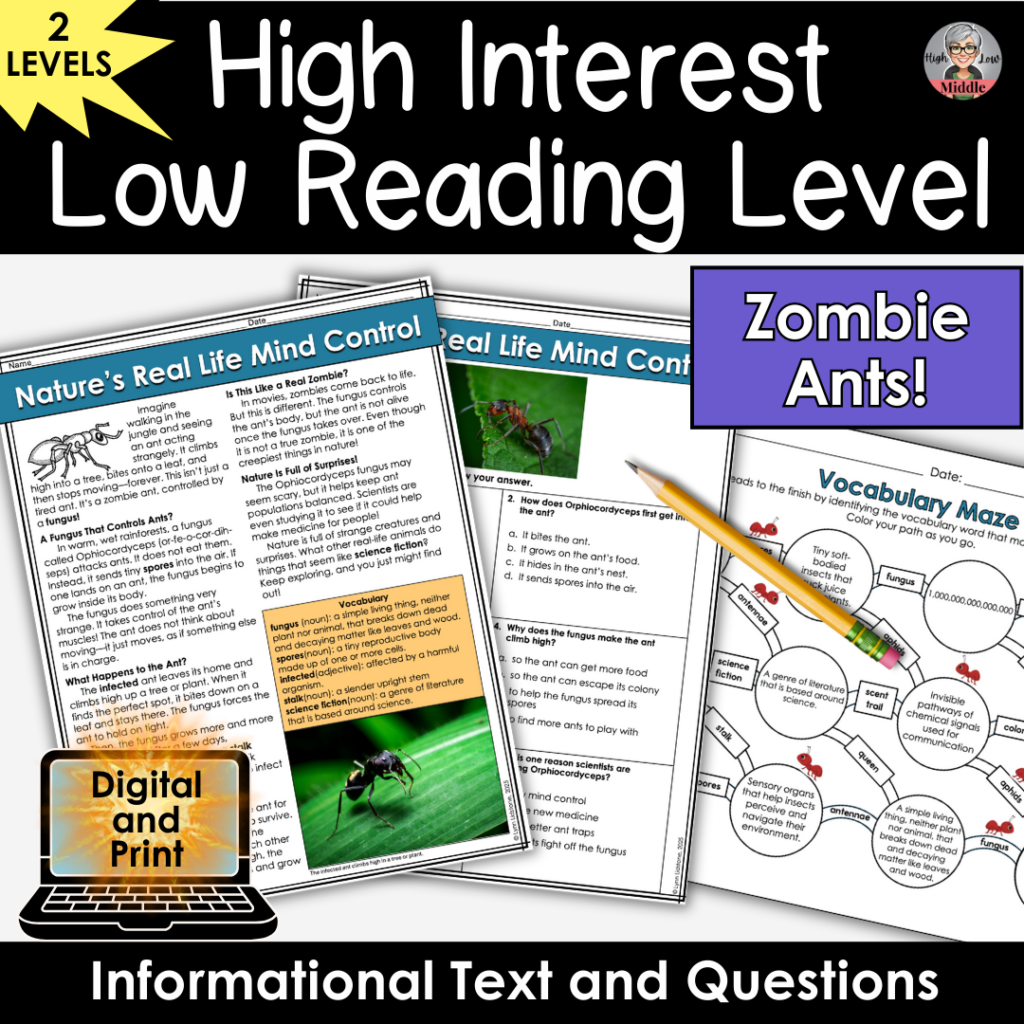
Weird science. Real facts. The kind of content that makes a struggling reader look up and say, “Wait. This is actually real?”
That’s where it starts.
Missed the earlier posts in this series? Why Some Older Struggling Readers Refuse to Read Building Trust with Struggling Readers